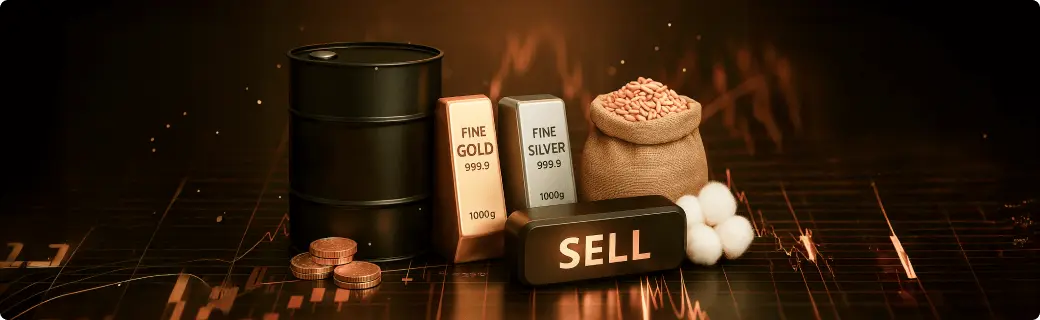
Why Trade Commodities
Commodities CFD trading offers potential diversified opportunities beyond traditional markets.
Commodities trading can offer diversification opportunities and is often considered in strategies aimed at managing inflation-related risks. From precious metals and energy products to agricultural goods, commodities are tangible assets that frequently respond to different economic drivers than stocks and bonds. This characteristic allows traders to access alternative market opportunities across a wide range of conditions.
Benefits of Commodities Trading via CFDs
Commodity CFDs allow traders to speculate on price movements without owning the underlying physical asset. This provides flexibility and access to global markets, whether prices are rising or falling. Commodities also possess distinct characteristics that may complement traditional asset classes.
Inflation Hedge
Commodities have historically been viewed as assets that may behave differently during periods of rising inflation. Widely traded commodities such as gold and crude oil have often been referenced as alternative assets during inflationary environments.
For example, during the 1970s oil crisis, crude oil prices rose sharply following supply disruptions, demonstrating how commodities can experience significant price movements under inflationary pressures. Gold has also been historically recognised for its ability to retain value during periods of currency depreciation, reinforcing its role as a potential store of value.
Portfolio Diversification
Diversification involves spreading exposure across different asset classes, sectors, or regions to help manage risk and improve portfolio resilience.
Commodities may contribute to diversification due to their generally lower correlation with traditional assets such as stocks and bonds. Because commodity prices are influenced by factors like supply disruptions, geopolitical events, and inflation trends, they may behave differently during periods of market stress.
| Asset Class | Correlation with Stocks | Correlation with Bonds |
|---|---|---|
| Commodities | Low | Low |
| Stocks | – | Moderate |
| Bonds | Moderate | – |
Global Supply and Demand Dynamics
Commodity prices are heavily influenced by global supply and demand conditions. Energy markets, for example, are sensitive to geopolitical developments, production decisions, and inventory levels.
The Organisation of the Petroleum Exporting Countries (OPEC) and its allies (OPEC+) play a significant role in oil markets by coordinating production levels to influence global supply. Adjustments in output can lead to noticeable price fluctuations due to their substantial share of global oil production.
Agricultural commodities such as wheat and corn are affected by weather patterns, seasonal cycles, and export demand, while gold prices often respond to economic uncertainty, currency movements, and central bank policies. Understanding these factors is essential when trading commodities.
Liquidity and Market Accessibility
Commodity markets are generally highly liquid, particularly for widely traded instruments such as gold, crude oil, and natural gas. High liquidity allows market participants to enter and exit positions more efficiently, which may be advantageous in fast-moving market conditions.
Leverage Opportunities
Commodity trading via CFDs offers access to leverage, enabling traders to gain exposure to larger positions with a smaller initial outlay. While leverage can amplify potential gains, it also increases the risk of losses.
For example, with a 10:1 leverage ratio, a trader can control a position worth $10,000 with an initial margin of $1,000. As a result, both profits and losses are magnified, making prudent risk management essential.
Risk vs. Reward in Commodity Trading
Commodity CFD trading offers potential opportunities, but it also involves substantial risk. Understanding both aspects is critical for informed decision-making.
Potential Rewards
Commodity markets can be highly volatile, creating opportunities to respond to significant price movements
Leverage allows traders to control larger positions with relatively lower capital requirements
Price movements may occur in response to global economic trends, supply disruptions, or geopolitical developments
Risks Associated with Commodity Trading
Commodity prices can be highly sensitive to external factors such as geopolitical tensions, natural disasters, and changes in supply or demand
Leverage magnifies both gains and losses; adverse market movements can result in losses that may exceed the initial investment
Sudden price fluctuations can occur, increasing exposure during volatile market conditions
Managing Risk in Commodity Trading
Effective risk management is an important part of commodity trading. Traders commonly apply the following practices:
Diversification across multiple commodities and asset classes to help balance exposure
Stop-loss orders to automatically close positions if prices move beyond predefined risk levels
Disciplined position sizing and cautious use of leverage
Structured trading plans and objective decision-making to reduce emotional trading
Explore More About Commodity Trading
Why Trade with Us?
Trade with a Forex broker that ensures the highest market standards for your trading convenience.
Be Confident, Be Sure


Trade with confidence
150+ countries
24/7 support

Your Trading journey is safe and secure
200+ payment methods
Trust We Have Earned