Commodities Trading Strategies
Discover 7 commonly used commodities trading strategies and understand how traders approach markets such as oil and gold.
Understanding the Commodities Market
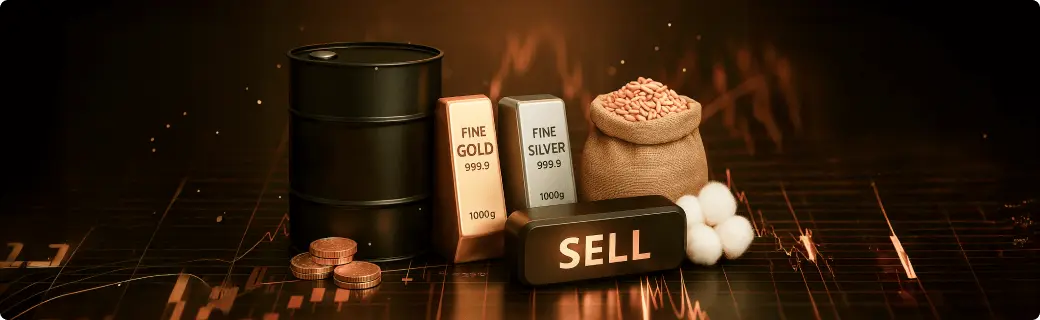
The commodities market is where essential raw materials that power the global economy are traded. These include energy products such as oil and natural gas; metals and minerals like gold, silver, copper, and diamonds; agricultural goods such as wheat, sugar, coffee, and livestock; and other primary resources.
Because commodities are fundamental to global production and consumption, their markets remain highly active. Each commodity also follows its own supply-and-demand cycle, influenced by factors such as weather, geopolitics, economic growth, and inflation. This diversity can present opportunities for traders seeking alternative exposure or portfolio diversification.
To navigate these dynamic markets effectively, traders often adopt a structured, systematic approach supported by a range of trading strategies.
7 Key Commodities Trading Strategies
Below are seven commonly used commodities trading strategies suitable for different trading styles and experience levels.
1. Technical Analysis-Based Trading
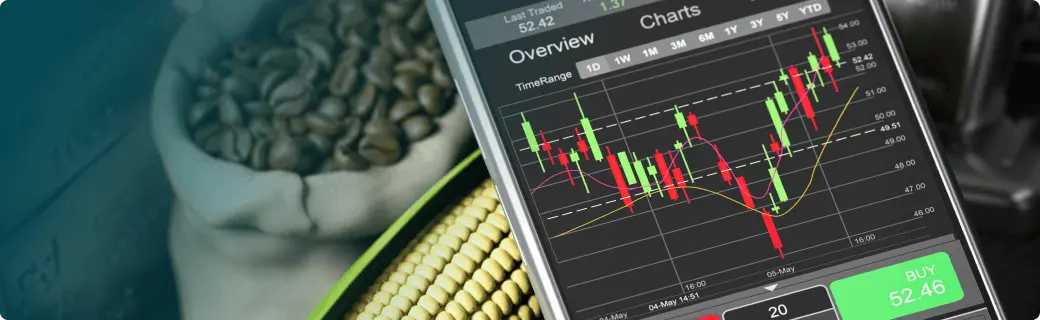
Technical analysis focuses on studying price movements using charts, indicators, and patterns. Traders analyse historical price data to identify trends, momentum, and potential entry or exit points.
This approach requires a solid understanding of candlestick charts and technical indicators such as moving averages, oscillators, and support and resistance levels. More experienced traders often customise indicator settings to align with their specific trading objectives.
Technical analysis can help traders interpret market behaviour, but it does not eliminate risk, especially in volatile commodity markets.
2. Fundamental Analysis-Based Trading
Fundamental analysis examines the underlying factors that drive commodity prices, primarily supply and demand dynamics.
Different commodities respond to different fundamentals:
Gold often reacts to inflation expectations, interest rates, and economic uncertainty
Oil is influenced by geopolitical events, production levels, and global demand
Agricultural commodities are sensitive to weather conditions and export demand
By tracking macroeconomic data and global events, traders may gain context for price movements and better understand why markets behave as they do.
3. Momentum Trading
Momentum trading aims to capitalise on strong price movements, often following breakouts or trend acceleration. The core idea is that once a price starts moving decisively in one direction, it may continue for some time.
Traders commonly use momentum indicators and volume-based tools to identify accelerating or weakening trends. While momentum strategies can be effective during strong market moves, sudden reversals remain a key risk.
4. Swing Trading
Swing trading focuses on capturing price movements that occur over short- to medium-term periods. Commodity prices rarely move in straight lines; instead, they fluctuate between highs and lows.
Swing traders aim to enter positions near support levels and exit near resistance, or vice versa, while trading in the direction of the broader trend. Positions are typically held longer than momentum trades, but shorter than long-term investments.
This strategy requires patience, discipline, and well-defined risk controls.
5. Range-Bound Trading
Range-bound trading is a variation of swing trading used when prices move within a defined range rather than trending strongly.
Traders identify clear support and resistance levels and place trades near these boundaries. Technical tools such as oscillators, moving averages, and trendlines are often used to identify turning points within the range.
This strategy works best in stable market conditions but may struggle during breakouts.
6. Diversification and Hedging
Diversification involves spreading exposure across multiple commodities with different economic drivers. Because commodities often respond differently to global events, diversification may help reduce overall portfolio volatility.
Hedging refers to techniques used to manage price risk, such as offsetting positions. While professional hedging often involves futures contracts traded on exchanges, the concept highlights the importance of managing exposure rather than relying on a single market direction.
7. Day Trading
Day trading is a short-term strategy where trades are opened and closed within the same trading day to avoid overnight risk.
Day traders aim to take advantage of intraday price movements and require fast decision-making, strong discipline, and a clear trading plan. Although exposure is brief, the fast-paced nature of day trading carries significant risk and may not be suitable for all traders.
Building a Personalised Commodities Trading Strategy
A personalised trading strategy helps traders approach markets with structure and consistency.
Set Goals and Define Risk Tolerance
Clearly define what you aim to trade and how much risk you are willing to take. Establishing risk limits in advance helps prevent emotional decision-making and overtrading.
Backtesting and Paper Trading
Testing strategies using historical data or demo accounts can provide insights into how a strategy might perform under different conditions. While past performance does not guarantee future results, it can help refine decision-making.
Continuous Learning and Adaptation
Commodity markets are influenced by ever-changing global factors. Staying informed and adapting strategies as market conditions evolve is a key part of long-term trading development.
Managing Risk in Commodity Trading
Common Risks
High volatility driven by geopolitical events, supply disruptions, and macroeconomic shifts
Leverage amplifies both gains and losses and may result in losses exceeding initial capital
External factors can impact prices unexpectedly
Risk Management Techniques
Use stop-loss and take-profit orders to manage exposure
Control position sizes to limit risk per trade
Diversify across different commodities to reduce concentration risk
Effective risk management is essential when trading leveraged products such as CFDs.
Explore More About Commodity Trading
Why Trade with Us?
Trade with a Forex broker that ensures the highest market standards for your trading convenience.
Be Confident, Be Sure


Trade with confidence
150+ countries
24/7 support

Your Trading journey is safe and secure
200+ payment methods
Trust We Have Earned