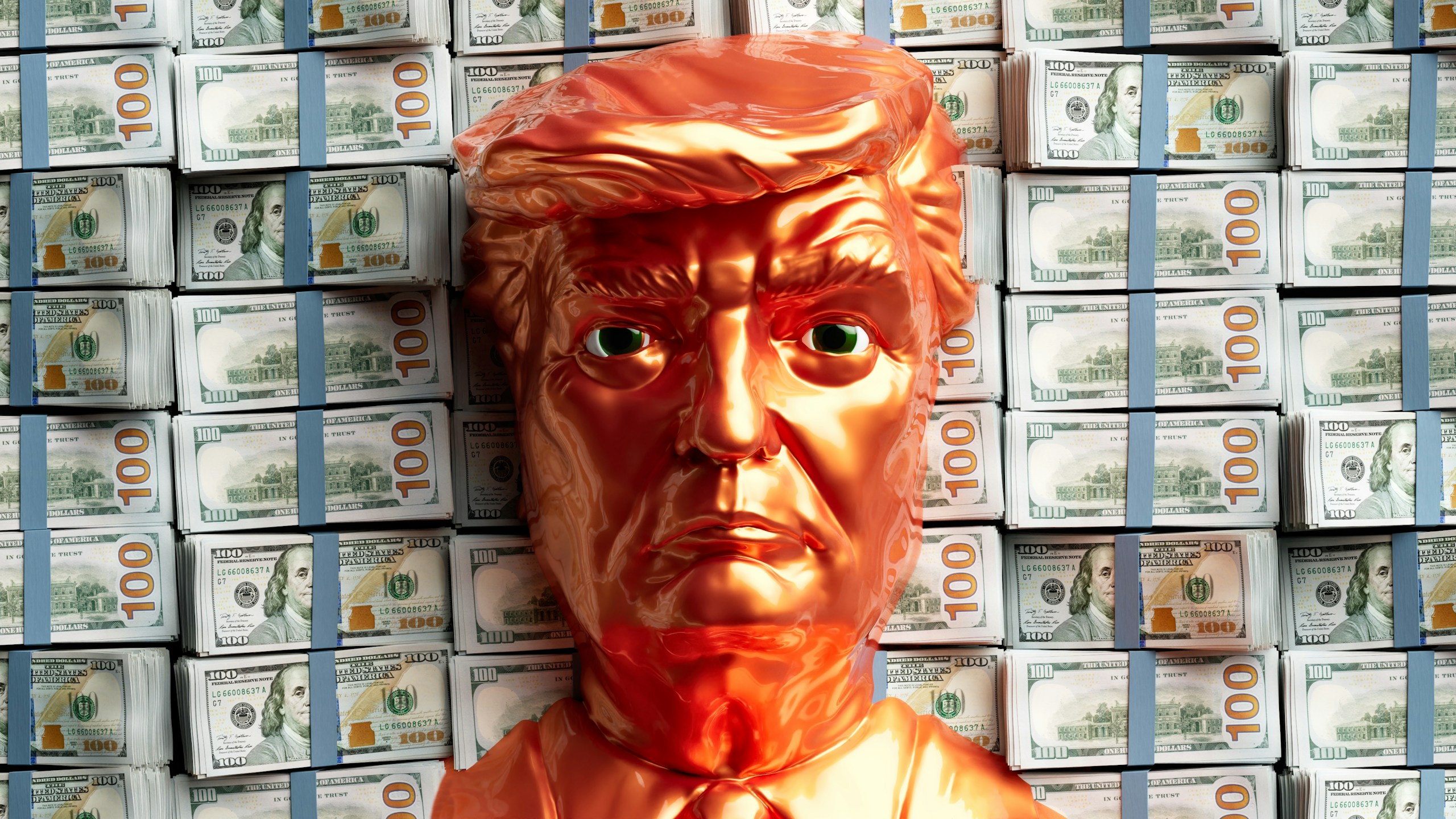
On 2 April 2025, global financial markets were hit by one of the most violent sell-offs in recent years. The catalyst was a sweeping policy announcement from US President Donald Trump, who unveiled a new tariff framework that dramatically reshaped expectations around global trade, inflation, and economic growth.
Within hours of the announcement, equities plunged, volatility exploded, and investors rushed for safety. Trillions of dollars in market value were wiped out across stocks, cryptocurrencies, and commodities, while traditional safe-haven assets surged.
This article provides an in-depth analysis of what triggered the market meltdown, how different regions and asset classes reacted, and what the sell-off may signal for markets going forward.
Key Takeaways
- Trump’s 2025 tariff policy triggered one of the sharpest global market sell-offs in decades.
- US equity indices recorded historic losses, with the Nasdaq entering a bear market.
- Asian and European markets followed Wall Street sharply lower, with multiple trading halts.
- Investor capital rotated aggressively into safe-haven assets such as gold, bonds, the Japanese yen, and the Swiss franc.
- Volatility surged to levels last seen during the COVID-19 crisis.
- Markets are now grappling with heightened recession risks, inflation uncertainty, and policy unpredictability.
The Tariff Announcement That Shook Global Markets
On 2 April 2025, President Trump announced a new tariff regime aimed at reshaping US trade relationships. The policy included:
- A flat 10% tariff on all US imports, effective from 5 April
- Significantly higher “reciprocal tariffs” on countries with large trade surpluses with the US:
- China: 34%
- European Union: 20%
- Japan: 24%
The stated objective was to protect US industries, rebalance trade deficits, and incentivize domestic manufacturing. However, the scale, speed, and breadth of the policy caught markets off guard.
While investors had priced in a modest increase in tariffs for 2025, few anticipated a sudden escalation of this magnitude. The lack of clarity on duration, exemptions, retaliation risks, and negotiation pathways intensified uncertainty almost instantly.
Why Markets Reacted So Violently
Financial markets dislike uncertainty more than bad news — and this policy delivered both.
Several factors amplified the market reaction:
1. Speed of Implementation
The tariffs were set to take effect within days, leaving little time for companies, supply chains, or markets to adjust.
2. Global Scope
Unlike targeted tariffs, this policy affected nearly every trading partner, raising fears of widespread retaliation.
3. Inflation vs Growth Dilemma
Tariffs tend to increase consumer prices while simultaneously slowing growth — a toxic mix for central banks already walking a fine line.
4. Positioning Risk
Markets were heavily positioned for a soft landing, rate cuts, and improving global growth. The announcement forced rapid de-risking.
US Stock Market: Historic Losses in Just Days
The US equity market bore the initial brunt of the shock.
Major Index Performance
In the sessions following the announcement:
- Dow Jones Industrial Average: Fell more than 5.5%
- S&P 500: Dropped nearly 6%
- Nasdaq-100: Declined about 5.8%, officially entering bear market territory
These losses followed an already brutal two-day rout that saw:
- The Dow fall more than 1,500 points on consecutive days — a first in history
- A single-day decline of over 2,200 points
- The S&P 500 lose nearly 11% in just two sessions, one of the worst two-day performances this century
- The Nasdaq fall over 22% from its peak
The White House Response
Despite the market turmoil, the administration remained firm. President Trump acknowledged the downturn but framed it as a necessary adjustment, stating that markets sometimes need to “take medicine” to fix structural problems.
This messaging did little to calm investors, who interpreted it as a sign that policy reversal was unlikely in the near term.
Asia: Export-Driven Economies Under Pressure
Asian markets experienced some of their worst trading sessions in years as fears of a global trade war intensified.
Japan
- The Nikkei 225 plunged nearly 9% at the open
- Trading in futures was briefly suspended
- The index closed down almost 8%
- Japan officially entered bear market territory, down over 20% from recent highs
South Korea
- The Kospi triggered a trading halt following sharp early losses
- Export-heavy sectors such as technology and autos were hit hardest
China and Hong Kong
- Mainland markets reopened after a holiday to sharp declines
- The Shanghai Composite and CSI 300 fell more than 7%
- Hong Kong’s Hang Seng Index collapsed nearly 12% in a single session
Asian economies are particularly vulnerable because of their heavy reliance on exports to the US, making them disproportionately exposed to tariff shocks.
Europe and the UK: Trade Exposure Weighs Heavily
European markets extended the global rout as investors reassessed growth prospects.
Key Moves
- Euro Stoxx 50 futures: Fell over 6% at the open
- Germany’s DAX: Plunged 10%, reflecting its export-driven economy
- France’s CAC 40: Down more than 6%
- Italy’s FTSE MIB: Slid nearly 6%
- UK FTSE 100: Dropped 6%, hitting a one-year low
Germany, in particular, faced heavy selling due to its dependence on global trade and manufacturing exports.
Volatility Explodes: The VIX Sends a Warning
The Cboe Volatility Index (VIX) surged above 45, marking its highest level since the early stages of the COVID-19 pandemic.
A VIX reading above 40 is widely regarded as a signal of:
- Extreme fear
- Liquidity stress
- Elevated systemic risk
The spike reflected:
- A surge in demand for protective put options
- Heightened uncertainty over trade, inflation, and monetary policy
- Growing fears of a global recession
How Much Value Was Wiped Out?
The scale of the destruction was staggering.
Market Capitalization Losses
- Over $11 trillion erased from US stock markets since Trump’s inauguration
- $6.6 trillion wiped out in just two days, the largest two-day loss on record
The “Magnificent Seven” Collapse
Mega-cap tech stocks led the sell-off:
- Apple: −$533 billion
- Nvidia: −$393 billion
- Amazon: −$265 billion
- Meta: −$200 billion
- Microsoft: −$165 billion
- Tesla: −$139 billion
- Alphabet: −$139 billion
The concentration of losses underscored how crowded positioning in large-cap tech amplified downside risk.
Impact Across Asset Classes
Safe-Haven Currencies
As risk appetite collapsed:
- The Japanese yen surged more than 3%
- The Swiss franc gained over 3%
Currencies backed by current account surpluses and strong external balances outperformed.
Bonds: Growth Fears Trump Inflation Concerns
Despite tariffs being inflationary in theory, bond markets focused on growth risks.
- US 10-year Treasury yields fell sharply
- Japanese government bond yields dropped to multi-month lows
Markets began pricing in:
- Around four 25bps rate cuts in 2025
- A growing probability of the first cut arriving earlier than expected
Gold: Record Highs, Then Profit-Taking
Gold surged to an all-time high above $3,160, driven by:
- Trade war fears
- Central bank demand
- Dollar weakness
However, by early April, prices pulled back as investors sold gold to cover losses elsewhere — a common pattern during severe liquidity stress.
Cryptocurrencies: Risk Assets Under Pressure
Crypto markets failed to act as a hedge:
- Bitcoin: Fell over 12%, dropping below $75,000
- Broader crypto market cap declined roughly 9%
- Major altcoins such as Ethereum, Solana, and XRP posted heavy losses
This reinforced crypto’s classification as a risk asset during macro stress events.
Market Outlook: What Happens Next?
Forex Markets
If tariff policy remains unchanged:
- JPY and CHF are likely to remain strong
- Emerging market currencies may stay under pressure
- Commodity-linked currencies (AUD, NZD) may underperform
The US dollar faces a complex outlook, caught between safe-haven demand and concerns over domestic growth and inflation.
Commodities
- Oil prices weakened amid demand fears and increased supply
- Industrial metals declined as global growth expectations fell
- Agricultural commodities faced uncertainty tied to trade flows
The market appears to be pricing in a significant slowdown in global demand.
Bonds
While growth fears dominate for now, the bond market faces a delicate balance:
- Slowing growth supports lower yields
- Rising inflation from tariffs could eventually push yields higher
- Any “sell America” narrative could pressure Treasuries further
Equity Indices
Equities remain highly sensitive to headlines.
Key drivers ahead include:
- Earnings guidance
- Retaliatory tariff announcements
- Central bank communication
- Any signs of negotiation or policy moderation
Some analysts view recent declines as overextended in the short term, while others warn of a deeper structural repricing.
Navigating Extreme Volatility
The April 2025 sell-off highlights how policy shocks can ripple through global markets at unprecedented speed.
For traders and investors, the key lessons are:
- Risk management matters more than forecasts
- Liquidity can disappear quickly
- Correlations rise sharply during stress
- Flexibility is critical in fast-moving environments
Understanding macro drivers, positioning, and cross-asset relationships is essential when volatility spikes.
Final Thoughts
Trump’s 2025 tariff announcement serves as a stark reminder that political decisions can reshape markets overnight.
The resulting sell-off was not just about tariffs — it was about uncertainty, positioning, and the fragility of confidence in a highly interconnected global financial system.
Whether markets stabilize or face further downside will depend on policy clarity, global responses, and the balance between inflation and growth risks in the months ahead.