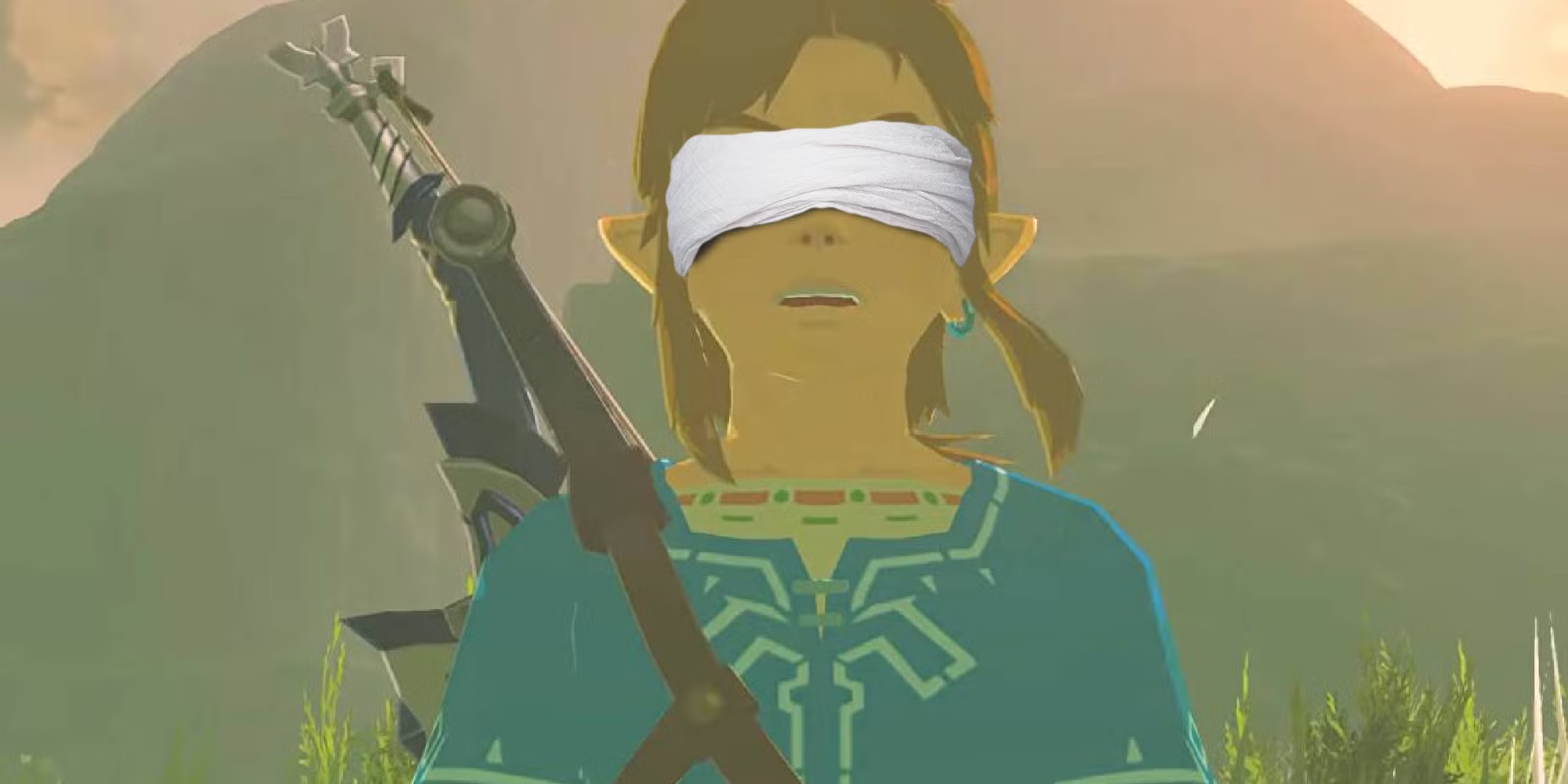

Imagine standing at the edge of a mountain trail, the wind whipping around you, jagged peaks rising on every side, and the sheer drop beneath your feet. Now imagine that you’re blindfolded. Every step becomes a test—not just of your physical balance, but of your trust, intuition, and mental fortitude.
This scenario, though seemingly extreme, is a powerful metaphor for challenges in life, adventure sports, and personal growth.
1. The Concept: Why a Blindfold?
Being blindfolded on a mountain range is an exercise in heightened senses and trust. When vision is removed:
- Hearing becomes more acute: The sound of wind, distant rocks, or even animal movements informs your decisions.
- Touch and balance dominate: Feet and hands interpret the terrain, seeking stability on uneven ground.
- Intuition is tested: Without visual cues, your inner sense of direction and judgment becomes critical.
This practice is often used in team-building exercises, survival training, and adventure therapy, emphasizing reliance on oneself and others.
2. Physical Challenges of the Terrain
Mountain ranges are naturally unpredictable:
- Steep Slopes and Loose Rocks: Each step carries the risk of slipping or falling.
- Variable Weather: Winds, rain, or snow can make surfaces slippery and conditions harsher.
- Altitude Effects: Reduced oxygen at higher elevations can impair physical and cognitive performance.
Navigating these challenges blindfolded forces a person to slow down, feel every step, and make careful, calculated movements.
3. The Role of Trust
In many blindfolded mountain exercises, a guide or team is present:
- The individual must trust the guide’s instructions implicitly.
- Blindfolded navigation strengthens interpersonal communication and reinforces the importance of trust in leadership and teamwork.
- It mirrors real-life situations where we must rely on expert advice when we cannot see the full picture.
4. Mental and Emotional Impacts
Being blindfolded in such a risky environment triggers:
- Heightened Anxiety: Fear of falling or losing direction is natural.
- Focused Mindfulness: With vision gone, every sense must be tuned in; the mind becomes intensely aware of small details.
- Self-Reflection: The inability to see your surroundings often brings clarity about personal limits and inner strength.
This combination of stress and concentration helps build mental resilience, preparing individuals for high-pressure situations in life and work.
5. Lessons from the Experience
- Trust Your Instincts: Your body knows more than you think. Feeling the ground, adjusting posture, and sensing your surroundings can guide you even without sight.
- Depend on Others Wisely: Blindfolded experiences highlight the value of communication, teamwork, and listening carefully.
- Patience is Critical: Moving too quickly can lead to mistakes. Slowing down and assessing each step increases safety and confidence.
- Embrace Vulnerability: Being blindfolded is a humbling experience, reminding us that uncertainty is part of any journey.
- Growth Through Discomfort: True learning often comes when you step outside your comfort zone, and this exercise amplifies that principle.
6. Applications Beyond the Mountain
The metaphor of being blindfolded on a mountain range extends to life, career, and personal challenges:
- Business and Career Decisions: Often, you must make strategic choices without seeing all the outcomes. Trusting your expertise and mentors is essential.
- Personal Growth: Facing fears and moving forward despite uncertainty develops resilience.
- Team Dynamics: Blindfold exercises improve trust, listening skills, and communication among colleagues or friends.
In essence, the experience teaches that sight is not always necessary for progress; awareness, trust, and careful action are often more important.
7. Tips for a Safe Blindfolded Mountain Experience
- Start Small: Begin on easier trails to build confidence.
- Use a Guide or Partner: Especially in high-risk areas, expert guidance is essential.
- Focus on Your Senses: Listen, feel, and move deliberately.
- Wear Proper Gear: Shoes with grip, protective clothing, and a helmet increase safety.
- Plan Exits and Emergency Measures: Always have a plan if things go wrong.
8. Conclusion
Blindfolded on a mountain range, the world becomes a blend of fear and clarity, uncertainty and focus. Each step teaches trust, patience, and resilience. While few will navigate a mountain trail without sight in real life, the exercise offers deep insights into how humans cope with the unknown, rely on their instincts, and grow through challenges.
This journey—physical, emotional, and psychological—reminds us that life’s most significant challenges often require trusting what we cannot see, moving forward cautiously but confidently, and learning to thrive amid uncertainty.