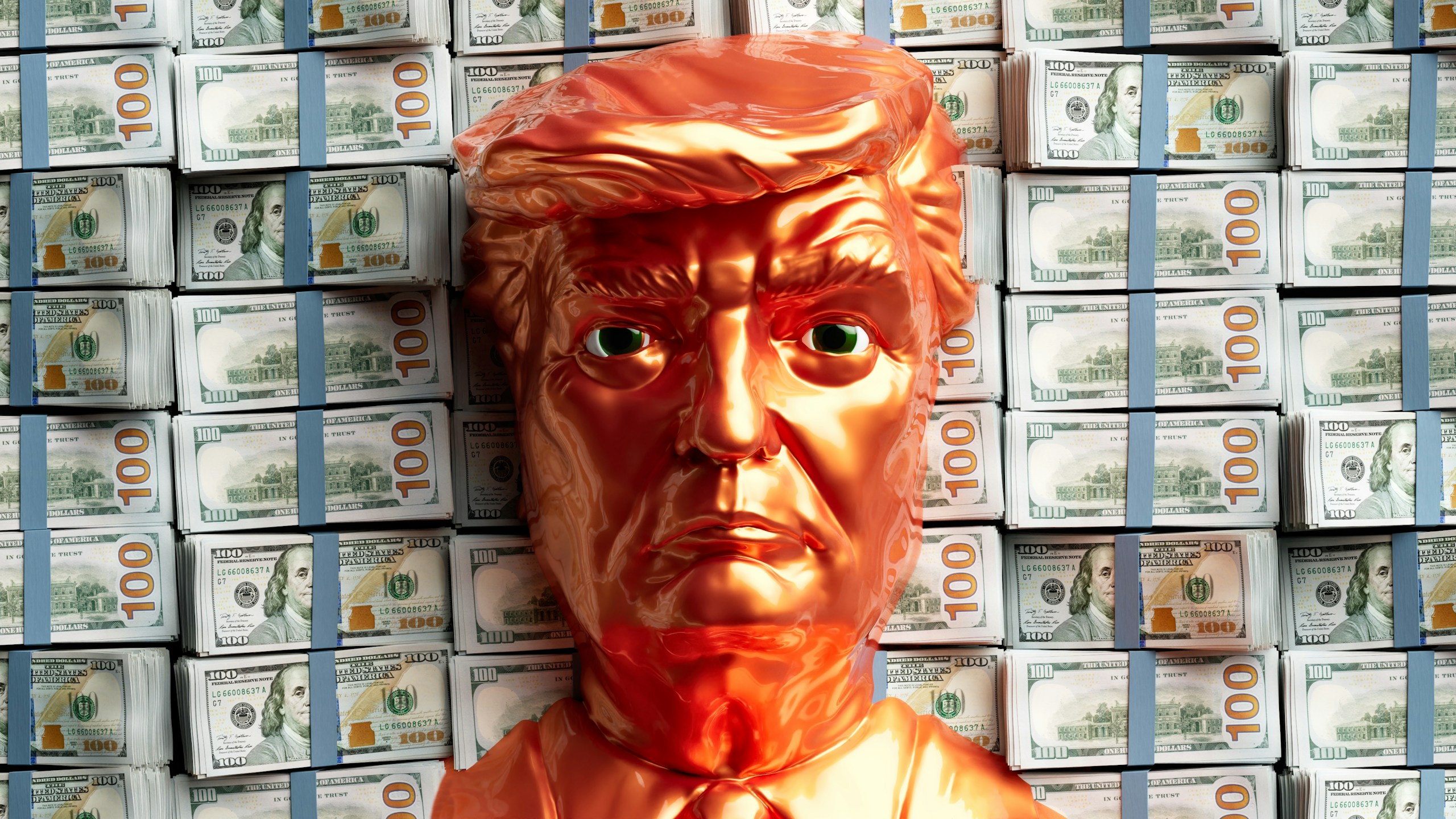
Donald Trump’s return to the White House on 20 January 2025 marked the beginning of his second presidential term—and true to form, he wasted no time making bold moves. Within hours of his inauguration, Trump signed and announced a series of executive actions and policy reversals that sent ripples through global financial markets.
For traders, investors, and market watchers, Trump’s Inauguration Day decisions weren’t just political theatre—they were potential market catalysts. From artificial intelligence investments and energy policy reversals to electric vehicle regulations and looming trade tariffs, these moves have meaningful implications for stocks, commodities, bonds, and currencies.
In this in-depth article, we break down the most market-relevant executive orders and policy announcements, explain what executive orders actually mean for traders, and explore how these decisions could shape market behaviour in the months ahead.
What Is an Executive Order—and Why Should Traders Care?
Before diving into specific policies, it’s important to understand what executive orders are and how much weight markets should give them.
Understanding Executive Orders
An executive order is an official directive issued by the President of the United States to manage operations within the federal government. These orders instruct executive agencies on how to interpret or enforce existing laws, but they do not create new laws or override the authority of Congress.
In simple terms:
- Executive orders guide how laws are applied
- They do not replace legislation passed by Congress
- They can be reversed, challenged, or defunded
Limitations of Executive Orders
Despite carrying the force of law, executive orders are far from permanent. They can be:
- Overturned by courts if ruled unconstitutional
- Blocked by Congress through legislation or funding cuts
- Reversed by future presidents
This makes their long-term economic impact uncertain.
Why Markets Still React
Even with these limitations, executive orders matter to markets because they:
- Signal policy direction
- Influence business sentiment
- Affect capital allocation decisions
- Create short-term volatility and trading opportunities
For traders, executive orders are best viewed as signals, not guarantees.
Major Trump Executive Orders and Policy Moves That Could Impact Markets
Let’s explore the most significant market-moving actions announced or signed during Trump’s Inauguration Day and immediate aftermath.
1. Up to $500 Billion in Private AI Infrastructure Investment
Although not technically an executive order, Trump’s announcement of massive private-sector investment into artificial intelligence infrastructure is arguably the most consequential development for markets.
Project Stargate: A New AI Supercycle?
During a White House briefing, Trump revealed that OpenAI, SoftBank, and Oracle plan to form a joint venture known as Project Stargate. The initiative aims to build 10 large-scale AI data centres, beginning in Texas and expanding across the United States.
Key highlights include:
- Up to $500 billion in investment over four years
- Creation of approximately 100,000 jobs
- Focus on AI computing, data processing, and healthcare innovation
Trump also hinted at using emergency powers to fast-track approvals, boost electricity generation, and cut regulatory red tape—significantly accelerating deployment timelines.
Market Implications of the AI Investment Boom
This announcement has broad implications across multiple sectors:
1. Technology Stocks
Companies involved in AI infrastructure—cloud providers, semiconductor firms, and data-centre operators—could benefit from increased demand and capital inflows.
2. Semiconductor Industry
AI expansion requires massive computing power, potentially boosting demand for advanced chips, GPUs, and networking equipment.
3. Data Centre REITs
Commercial real estate tied to data centres may see rising valuations as demand for high-capacity facilities grows.
4. Healthcare and Pharma
AI-driven diagnostics, drug discovery, and personalised medicine could give healthcare companies using AI a competitive edge.
Bottom line: The AI announcement reinforces the idea that the AI supercycle is far from over—and markets are likely to price that in aggressively.
2. Revoking Biden’s Electric Vehicle (EV) Mandate
One of Trump’s first formal executive actions was the reversal of several Biden-era policies aimed at accelerating electric vehicle adoption.
What Was the EV Mandate?
Under the previous administration, the federal government introduced measures designed to:
- Encourage EV adoption
- Reduce emissions
- Expand EV charging infrastructure
These policies included:
- A non-binding target for 50% of new vehicle sales to be zero-emission by 2030
- Federal funding for charging networks
- Consumer EV tax credits worth up to $7,500
What Trump Changed
Trump’s executive order effectively:
- Eased emission standards for vehicles
- Slowed or halted federal EV charging investments
- Signalled the potential end of EV tax credits
- Removed federal pressure on automakers to prioritise EVs
Market Reaction and Implications
Impact on EV Stocks
Following the announcement:
- EV manufacturers, including Tesla, saw immediate share price pressure
- Investors reassessed growth assumptions tied to government support
That said, long-term EV adoption is unlikely to disappear—it may simply slow down.
Traditional Automakers
Legacy automakers like Ford and GM, which had already scaled back EV plans, could benefit as consumers regain flexibility to choose between internal combustion engines (ICE) and EVs.
The Tesla–Space Economy Paradox
While Tesla may face headwinds, Trump’s renewed focus on space exploration—including pledges to land Americans on Mars—has boosted space-related stocks. This could indirectly benefit companies tied to the broader aerospace ecosystem.
3. Rolling Back Restrictions on Oil and Gas Expansion in Alaska
Energy policy is another area where Trump wasted no time implementing change.
Reversing the Alaska Drilling Ban
Trump signed an executive order to roll back restrictions on oil and gas exploration in Alaska, reversing protections implemented during the Biden administration.
The move aligns with Trump’s long-standing energy stance:
“Drill, baby, drill.”
Legal Uncertainty Remains
It’s important to note:
- Similar attempts during Trump’s first term were blocked by courts
- Judges ruled that certain drilling bans require Congressional approval to overturn
As a result, this executive order is highly likely to face legal challenges.
Market Impact If the Order Survives
If upheld, the implications could be significant:
Oil & Gas Stocks
- Expanded exploration rights could unlock massive reserves
- Energy producers may see increased valuations
Energy Sector Rotation
- Investors could rotate capital from renewables back into fossil fuels
- Traditional energy stocks may outperform in the short to medium term
4. Suspension of Offshore Wind Leasing
In addition to promoting fossil fuels, Trump signed another executive order suspending offshore wind leasing across the outer continental shelf pending further environmental and economic reviews.
What This Means for Renewables
Trump has long been critical of wind energy, and this move:
- Slows the development of offshore wind projects
- Increases uncertainty for renewable energy investors
- Signals a broader rollback of green energy priorities
Market Implications
- Renewable energy stocks could face pressure
- Energy portfolios may rebalance toward oil, gas, and nuclear
- Long-term clean energy trends may continue globally, but US leadership could weaken
5. Proposed Trade Tariffs: A Major Market Risk
While Trump has not yet signed executive orders imposing new tariffs, his rhetoric alone has already influenced markets.
Proposed Tariff Plans
Trump has discussed:
- 10% tariff on Chinese imports
- 25% tariffs on Canada and Mexico
- Potential duties on European Union goods
- A tentative implementation deadline of 1 February 2025
How Tariffs Affect Markets
Inflationary Pressure
Tariffs raise import costs, often passed on to consumers—fueling inflation.
Interest Rates and Bonds
Higher inflation expectations could:
- Push bond yields higher
- Increase rate volatility
- Support short-term bond trading strategies
Corporate Profit Margins
Companies reliant on imported materials may see:
- Higher input costs
- Lower margins
- Stock underperformance
Currency Markets
Tariffs often trigger:
- Currency volatility
- Capital flow shifts
- Safe-haven demand
Should Traders Act on Executive Orders?
This is the critical question.
Avoid Trading on Hype Alone
Executive orders:
- Can be reversed
- Can be delayed
- Can be blocked entirely
Overreacting can lead to costly mistakes.
How Traders Should Approach Executive Orders
Smart traders:
- Watch market reactions, not just headlines
- Focus on sectors, not individual policies
- Combine policy signals with technical analysis
- Monitor legal and legislative developments
In the long run, economic fundamentals matter more than political announcements.
Conclusion: Trump’s Second Term and Market Volatility
Whether admired or criticised, Donald Trump remains one of the most market-moving political figures of the modern era. His return to the presidency has once again injected volatility, speculation, and opportunity into global financial markets.
From AI mega-investments and energy deregulation to EV policy reversals and tariff threats, Trump’s early actions provide important signals—but not certainties.
For traders and investors, the key takeaway is clear:
Stay informed, stay flexible, and don’t trade headlines blindly.
Markets reward discipline far more than excitement.
Trade Global Markets with Confidence
Trade US stocks, bonds, commodities, indices, ETFs, and more via CFDs with Vantage. Benefit from competitive spreads, low fees, and award-winning customer support.
Open a live account today and stay ahead of market-moving events.
Risk Disclaimer
This material is provided for educational purposes only and does not constitute investment advice. It does not take into account your financial objectives, situation, or needs. Trading involves risk, and past performance is not indicative of future results. Always seek independent financial advice before trading.