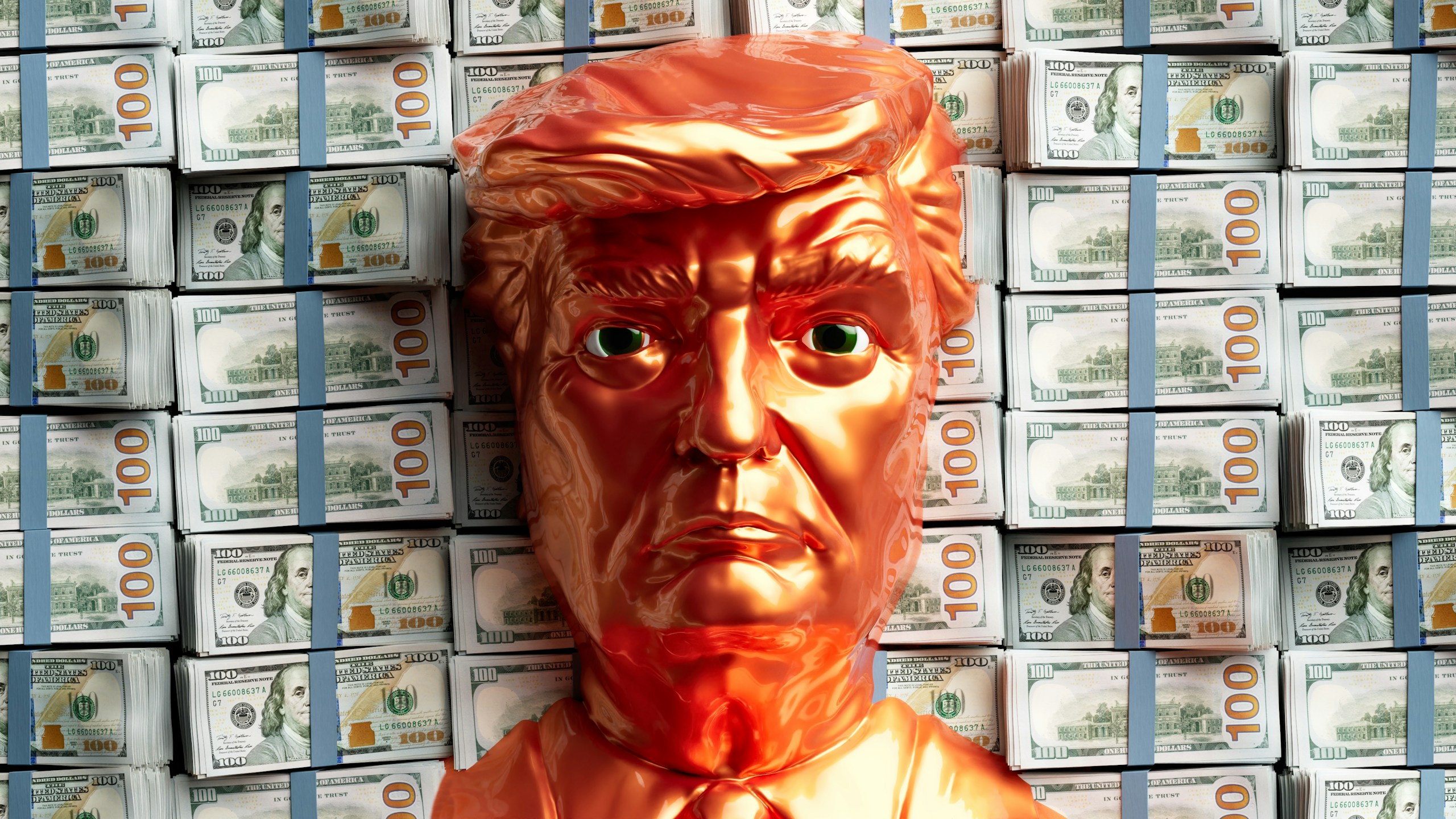

Global financial markets are once again entering a phase of heightened uncertainty. Inflation dynamics remain fragile, geopolitical risks continue to simmer, and renewed tariff rhetoric from former US President Donald Trump is adding a fresh layer of unpredictability. For traders, investors, and institutions alike, one question dominates the conversation:
What’s next for the US dollar (USD)?
As markets brace for upcoming US inflation data and the release of the Federal Open Market Committee (FOMC) minutes, attention is being pulled in multiple directions. Trade policy uncertainty, central bank expectations, and shifting risk sentiment are colliding—creating both opportunity and risk across currency markets.
In this in-depth analysis, we break down:
- The role of inflation and tariffs in shaping Fed policy
- Why CPI and FOMC minutes still matter, even amid political noise
- What this means for EURUSD and USDCNH from both macro and technical perspectives
- Key scenarios traders should prepare for in the weeks ahead
Market Overview: Politics vs. Policy – A Battle for Attention
Financial markets thrive on clarity, and right now, clarity is in short supply.
Trump’s renewed focus on tariffs—particularly those aimed at China and strategic trade partners—has revived memories of the trade wars that defined his previous presidency. Even without formal implementation, the mere threat of tariffs can influence inflation expectations, supply chains, and investor confidence.
This political uncertainty has the potential to overshadow key economic releases such as:
- US Consumer Price Index (CPI)
- FOMC meeting minutes
However, history suggests that while political headlines may dominate short-term sentiment, monetary policy data ultimately drives sustained currency trends. Traders who ignore CPI and Fed signals do so at their own risk.
Why CPI and FOMC Minutes Still Matter More Than Headlines
Understanding the Fed’s Influence on Global Markets
The Federal Reserve is the most influential central bank in the world. Its decisions on interest rates and liquidity conditions ripple through:
- Forex markets
- Equity valuations
- Bond yields
- Emerging market capital flows
The FOMC minutes provide a behind-the-scenes look at how policymakers view:
- Inflation risks
- Economic growth
- Labor market conditions
- Financial stability
More importantly, the tone of the minutes often reveals how unified (or divided) the Fed is about the future policy path.
March FOMC Recap: Stability with a Warning Label
At its March meeting, the Fed largely met market expectations:
- Interest rates were left unchanged
- The Fed continued to signal two rate cuts later this year
However, one statement stood out:
“Uncertainty around the economic outlook has increased.”
This acknowledgement matters. It signals that while the Fed sees progress on inflation, new risks—such as tariffs—could disrupt that progress.
Tariffs tend to:
- Increase import costs
- Push consumer prices higher
- Reduce corporate margins
- Slow economic growth
If tariffs are reintroduced aggressively, the Fed may find itself trapped between fighting inflation and supporting growth—a dilemma that could significantly affect the USD.
CPI: The Inflation Gauge That Can Shift Everything
Why CPI Is Critical Right Now
The Consumer Price Index (CPI) remains the Fed’s most closely watched inflation indicator. While the Fed also tracks core PCE inflation, CPI often has a stronger immediate market impact.
The most recent CPI data offered some relief:
- February CPI rose 0.2% month-over-month
- Annual inflation slowed to 2.8% year-over-year
- The print came slightly below expectations
This suggested that inflation was gradually cooling—supporting the case for rate cuts later in the year.
Enter Tariffs: The Inflation Wildcard
Tariffs act as a cost shock to the economy. If implemented, they could:
- Raise prices on imported goods
- Increase production costs for businesses
- Filter into consumer inflation
If the upcoming March CPI shows renewed price pressure, markets may reassess:
- The timing of Fed rate cuts
- The likelihood of “higher for longer” rates
- The future trajectory of the USD
USD Outlook: Three Key Scenarios
1. Hot CPI + Hawkish Fed Tone
- Rate cuts delayed
- Treasury yields rise
- USD strengthens across the board
2. Soft CPI + Dovish Signals
- Rate cuts remain on track
- Risk appetite improves
- USD weakens, especially against high-beta currencies
3. Mixed Data + Political Noise
- Choppy, range-bound USD
- Higher volatility
- Increased sensitivity to headlines
Traders should prepare for all three scenarios, rather than betting on a single outcome.
EURUSD Analysis: Can the Rally Hold?
Fundamental Drivers Behind EURUSD Strength
EURUSD has staged a notable recovery this year, driven by:
- Improved European growth expectations
- Germany’s significant increase in defence spending
- A €500 billion infrastructure investment initiative
These developments have helped reduce recession fears in the eurozone and strengthened confidence in the euro.
However, EURUSD remains highly sensitive to US inflation and Fed expectations.
EURUSD: Macro Scenarios
Bullish Case
- US CPI remains soft
- Fed maintains rate-cut guidance
- EURUSD benefits from narrowing rate differentials
Bearish Case
- US CPI surprises to the upside
- Fed adopts a more cautious stance
- USD regains strength, capping EURUSD gains
In this environment, EURUSD’s outlook is mixed rather than one-directional.
EURUSD Technical Analysis (Daily Chart)
From a technical standpoint:
- Price remains above the Ichimoku Cloud, signaling bullish bias
- An ascending trendline continues to support higher lows
- Momentum has moderated, suggesting a potential retracement
Key Levels to Watch
Support:
- 1.0750 – key technical support aligned with Fibonacci levels
- 1.0500 – deeper support if trendline breaks
Resistance:
- 1.1050 – previous swing high
- 1.1200 – major resistance zone
Technical Outlook
If price holds above 1.0750 and momentum resumes, a push toward 1.1050–1.1200 remains possible. However, a decisive break below the trendline could signal a deeper corrective phase.
USDCNH: A Quiet Pair Worth Watching Closely
While much of the market’s attention has been focused on EURUSD, USDCNH has been quietly sending important signals.
PBoC’s Subtle Shift
Recent price action suggests that the People’s Bank of China (PBoC) may be allowing the yuan to fluctuate more freely than before. This shift is subtle—but significant.
Historically, the PBoC has actively managed yuan volatility through:
- Daily fixings
- Direct intervention
- Liquidity adjustments
A looser grip on the currency could have broader implications for global risk sentiment.
USDCNH and Volatility
Despite the macro backdrop:
- 1-month volatility in USDCNH remains low
- Market participation appears limited
- Many traders may be under-positioned
This creates the potential for sharp moves if volatility suddenly returns.
USDCNH Macro Scenarios
Bullish USDCNH
- Hot US CPI
- Fed delays rate cuts
- USD strengthens
- Yuan weakens, pushing USDCNH higher
Range-Bound Scenario
- Recession fears rise
- Risk sentiment deteriorates
- PBoC intervenes to stabilize the yuan
Softer USD Scenario
- CPI comes in below expectations
- USD weakens
- USDCNH upside becomes more gradual
USDCNH Technical Analysis (Daily Chart)
Technically:
- Price has broken above a descending trendline
- USDCNH now trades above the Ichimoku Cloud
- Momentum favors further upside
Key Levels to Monitor
Resistance:
- 7.3650 – near recent highs
- 7.4100 – historically sensitive zone
Support:
- 7.2800 – first downside support
- 7.2250 – deeper retracement level
If price approaches 7.37–7.41, traders should watch closely for PBoC reaction or intervention signals.
Trading Considerations: Navigating a Headline-Driven Market
With inflation data, central bank signals, and political headlines colliding, traders should:
- Expect higher volatility around CPI and FOMC minutes
- Avoid over-leveraging positions
- Use clear stop-loss and risk management rules
- Stay flexible as narratives shift
Markets may react sharply not only to data—but to how that data is interpreted through the lens of tariffs and future policy risk.
Final Thoughts: Stay Nimble, Stay Informed
The outlook for the US dollar is becoming increasingly complex. Inflation trends, tariff risks, and Federal Reserve policy are all pulling in different directions, creating an environment where adaptability matters more than conviction.
CPI and FOMC minutes remain critical—even if political noise temporarily steals the spotlight. Traders who stay focused on the fundamentals, respect technical levels, and manage risk effectively will be best positioned to navigate the turbulence ahead.
In markets like these, survival is strategy—and risk management is your edge.